
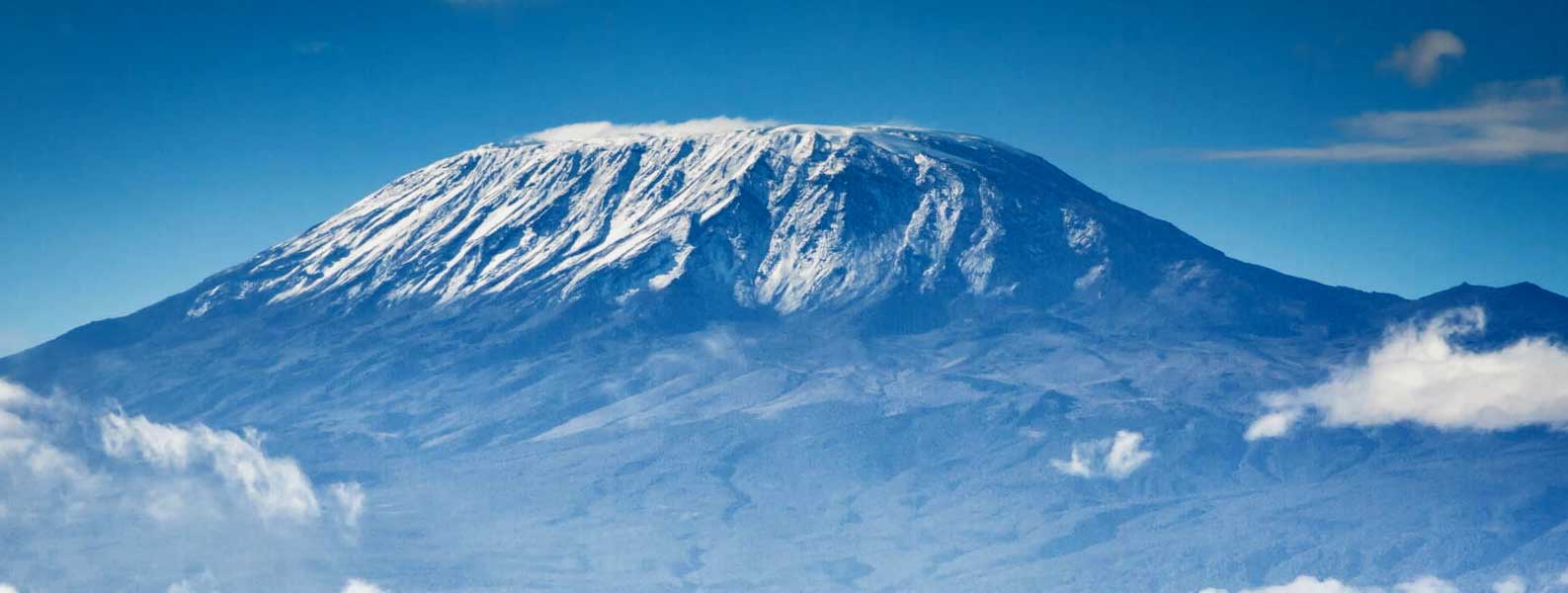
Mount Kilimanjaro is the tallest mountain on the African continent and the highest free-standing mountain in the world.
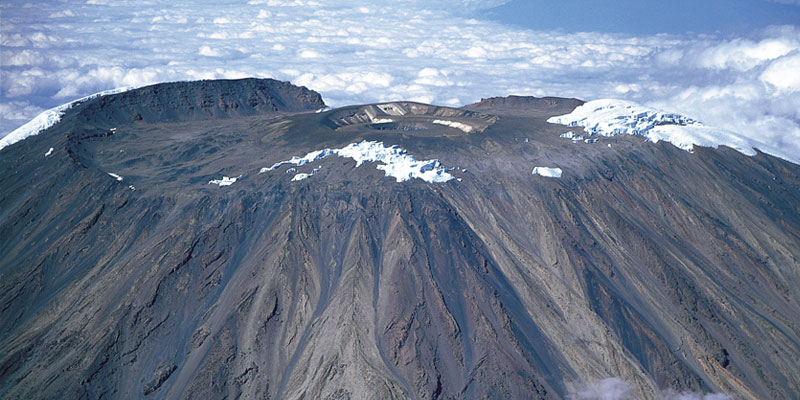
Kilimanjaro has three volcanic cones, Mawenzi, Shira and Kibo. Mawenzi and Shira are extinct but Kibo, the highest peak, is dormant and could erupt again. The most recent activity was about 200 years ago; the last major eruption was 360,000 years ago.
About the trek terrain
Mount Kilimanjaro was born from catastrophic movements in the earth’s crust that created the Great Rift Valley. Kilimanjaro is one of the world’s most reachable high summits. Most visitors will reach the crater rim with little more than a walking stick, proper clothing and determination. And those who reach Uhuru Point, the actual summit, or Gilman’s point on the lip of the crater, will have earned their climbing certificates.
The ascent of the slopes is a virtual climactic world tour from the tropics to the arctic. The cultivated foot-slopes give way to a lush montane forest inhabited by elusive elephant, leopard, buffalo, the endangered Abbot’s duiker and other small animals and primates. Higher still lay the moorland zone, where a cover of giant heather is studded with otherworldly giant lobelias.
Above 4000m, a surreal alpine forest supports little life other than a few hardy mosses and lichen. Then, finally, the last vestigial vegetation gives way to a winter wonderland of ice and snow and the wonderful beauty of the roof of the African continent.
Whether or not your intent is to scale the peak, Kilimanjaro will fascinate you at every level.
We take the MARANGU route :
There are seven official routes on Mount Kilimanjaro, six of which are used for ascent (Machame, Umbwe, Marangu, Shira, Lemosho, Rongai), and one of which is used for descent only (Mweka).
The Marangu Route is the oldest on Kilimanjaro and is also one of the most popular – mainly because it is the only route on the mountain that has huts provided for hikers. There are 60 bunk beds each at Mandara and Kibo Huts, and 120 bunk beds at Horombo Hut.
The Marangu route, also known as the “Coca-Cola” route.
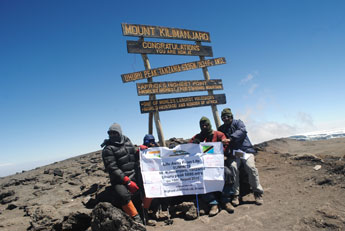
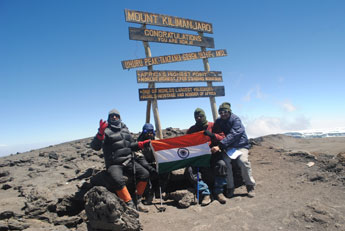
See pics of last expedition to Mt. Kilimanjaro
Day 1 - Arrival at Kilimanjaro International Airport (JRO/KIA) -Visa formalities - transfer toMoshi
Arrive in the morning at Kilimanjaro airport, after Visa formalities transfer by pvt. vehicle to Moshi in Tanzania. The journey from the airport to Moshi is approx 1 hour. Spend the day at Moshi town and also for some last minute preparations for the trek. Overnight in hotel at Moshi.
Day 2- Marangu Gate (5,900 ft. / 1,800 m) ~ Mandara Hut (8,860 ft. / 2,700 m)
Departing from Moshi a 60-minute drive will take you through the Village of Marangu to the Kilimanjaro National Park Gate. We will patiently wait for our permits to be issued while watching the hustle and bustle of operations as many crews prepare for the journey ahead enjoy the beautiful rainforest scenery and windy trails while your guide tells you about the local flora and fauna and natural wildlife. At these lower elevations, the trail can be muddy and quite slippery. We highly recommend proper rain gear and trekking poles. We will spend our first night at Mandara Hut, a group of wooden A-framed huts set in a forest clearing
Day 3 - Mandara Hut ~ Horombo Hut (12,200 ft. / 3,720 m)
After a good night’s sleep and a hearty breakfast, we emerge from the rainforest and continue on an ascending path, through heath land, looking for giant lobelias and groundsels. Continue up into open moorlands where small shrubs are the main vegetation. Stop halfway for lunch, to enjoy amazing views of Mawenzi. Arrive at the Horombo Huts late afternoon beneath the spectacular Kibo Summit viewpoint. Temperatures begin to drop.
.
Day 4 - Horombo Hut ~ Acclimatization Day
You can spend a full day and a second night at Horombo. On this day, you can either rest at the huts or take a stroll up to the Mawenzi base camp then return to the Horombo Huts. This extra day will help your acclimatization, and further your understanding of the mountains weather and altitude. A hike towards Mawenzi, passing the Zebra Rocks on the way is strongly recommended for acclimatisation.
Day 5 - Horombo Hut ~ Kibo Hut (15,430 ft. / 4,703 m)
After breakfast, we continue through the dwindling heath land that blends into a moonscape as you enter the sweeping saddle connecting Mawenzi and Kibo. Here while we stop for lunch, and later when you cross this surprisingly large saddle, you can examine the summit climb up Kibo that you will be starting in just a few hours. The last place where water is available is at 4130m. From Kibo Hut, the summit is now a further 1195m of ascent. We will make our summit ascent tonight so we will have to go to bed early to get as much rest as possible.
Day 6 - Kib Hut ~ Uhuru Peak (19,340 ft. / 5,895 m) ~ Horombo Hut (12,200 ft. / 3,720 m)
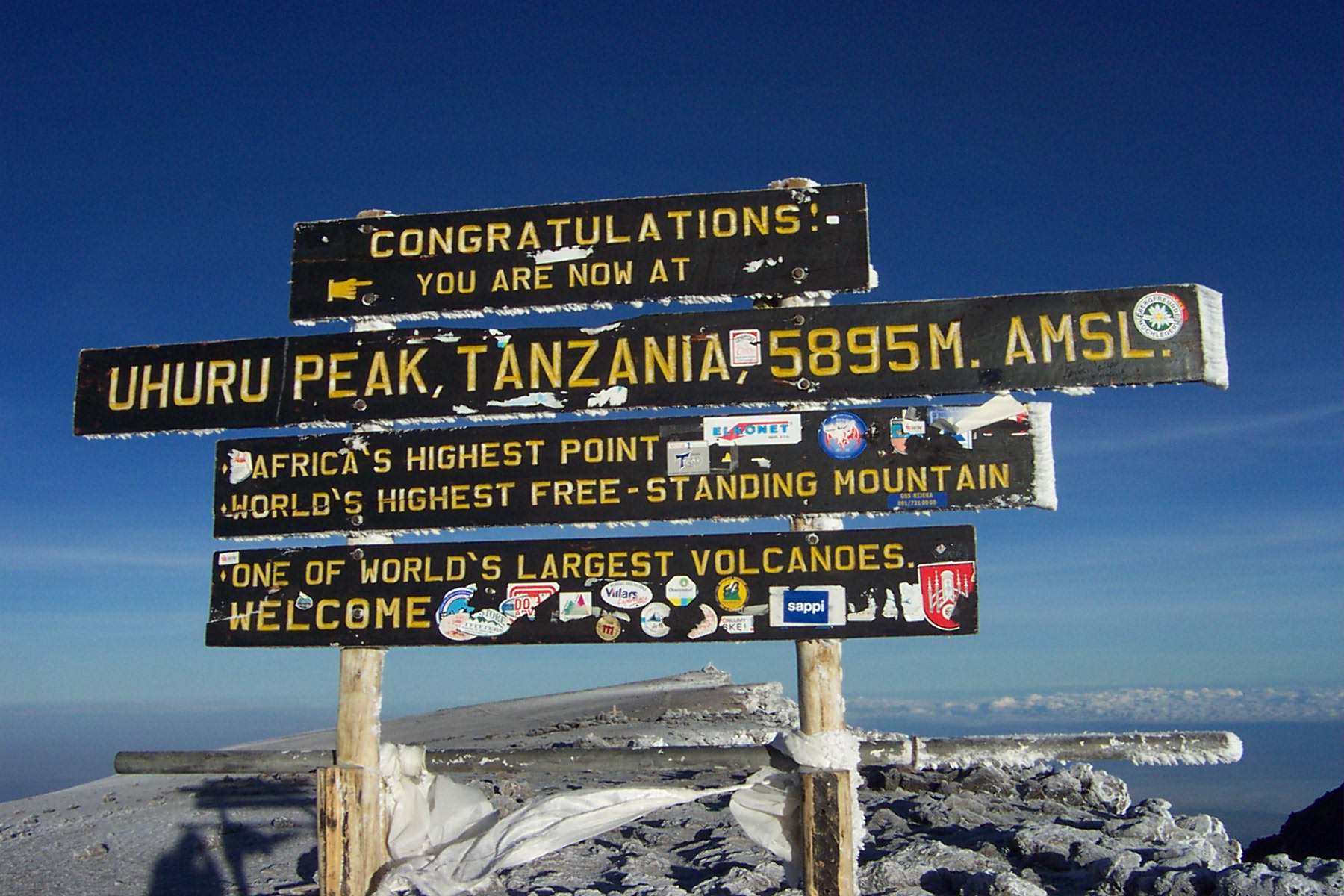
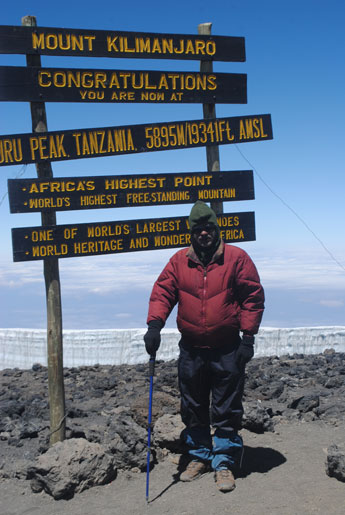
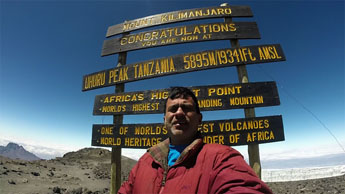
You will wake up at 11pm for tea, snacks and dress warm, Very early in the morning at 12am, we begin our push to the summit. This is the most mentally and physically challenging portion of the trek. The wind and cold at this elevation and time of day can be extreme. We ascend in the darkness for several hours while taking frequent, but short, breaks. At Gilman’s point (18,600 ft/5685m), you will be rewarded with the most magnificent sunrise you are ever likely to see coming over Mawenzi Peak. You will hike for I hour to Stella point (18800ft/5756m), Finally you will arrive at Uhuru Peak- the highest point on Mount Kilimanjaro and the continent of Africa.
After spending a few moments taking in the plains of Africa and your accomplishment, we descend to Horombo Hut for nap and brunch, Later in the evening; we enjoy our last dinner on the mountain and a well-earned long sleep.
Day 7 - Horombo Hut ~ Marangu Gate (5,900 ft. / 1,800 m) ~ Arusha / Moshi
After breakfast and a heartfelt ceremony of appreciation and team bonding with your crew, it’s time to say goodbye. We continue the descent down stopping at the Mandara Huts for lunch. Remember to tip your guides, cooks, and porters, since you will be leaving them here. You return back to the Marangu Park Gate and receive your summit certificates. As the weather is drastically warmer, the terrain is wet, muddy, and steep and we highly recommend gaiters and trekking poles. From the gate, a vehicle will meet you to drive you back to your hotel in Moshi (about 60 minutes)
Day 8 - Moshi to Kilimanjaro aiport drop
| INCLUDED | Airport Transfers | Activity point transfers |
| Accommodation in hotel on BB basis (twin sharing) | Mountain, park, campsite, and hut fees | |
| LAFL service charges | Professional mountain guides* | |
| Cooks and porters* | All meals while trekking | |
| NOT INCLUDED | All beverages (including bottled mineral water) | Insurance |
| Camera fees and tips | Sightseeing out of itinerary | |
| Emergency evacuation costs | Personal expenses | |
| Taxes | Tanzanian Visa | |
| Sleeping bags | Personal trekking gear | |
| Tips to the staff | Excursions not detailed above | |
| All not mentioned in the ‘Included’ section |
*A registration fee of USD 200 is required to secure your place on the trek. Please note, in the event of participant cancellation, this fee is non-refundable.
*Please note that cancellation charges are calculated of the total amount payable and not of advance amount. If 100% of the amount is not paid while registering, the cancellation policy stands void.
31stAugust to 7th September 2025
trek dates : 1st Sept to 6th Sept 2025
Tour Reviews
There are no reviews yet.
Leave a Review